
Skin Cancer
Here in the South West of England, the rates for skin cancer are higher than anywhere else in the United Kingdom. The eyelids are a high risk site for skin cancer due to their sun exposure.
If you notice new skin lesions, particularly if rapid growing, bleeding or crusting then it is important to get them seen to straight away.
There are various forms of skin cancer that can affect the eyelid, with basal cell carcinomas forming 90-95% of all eyelid malignancies.
Treatment of eyelid skin cancers or ‘periocular malignancies’ most commonly involves surgical excision. The subsequent reconstruction varies dependant on the size of the lesion removed, the location of the lesion and patient factors such as tissue laxity. This will all be discussed at your clinic appointment and a management plan, tailored to the individual will be created.
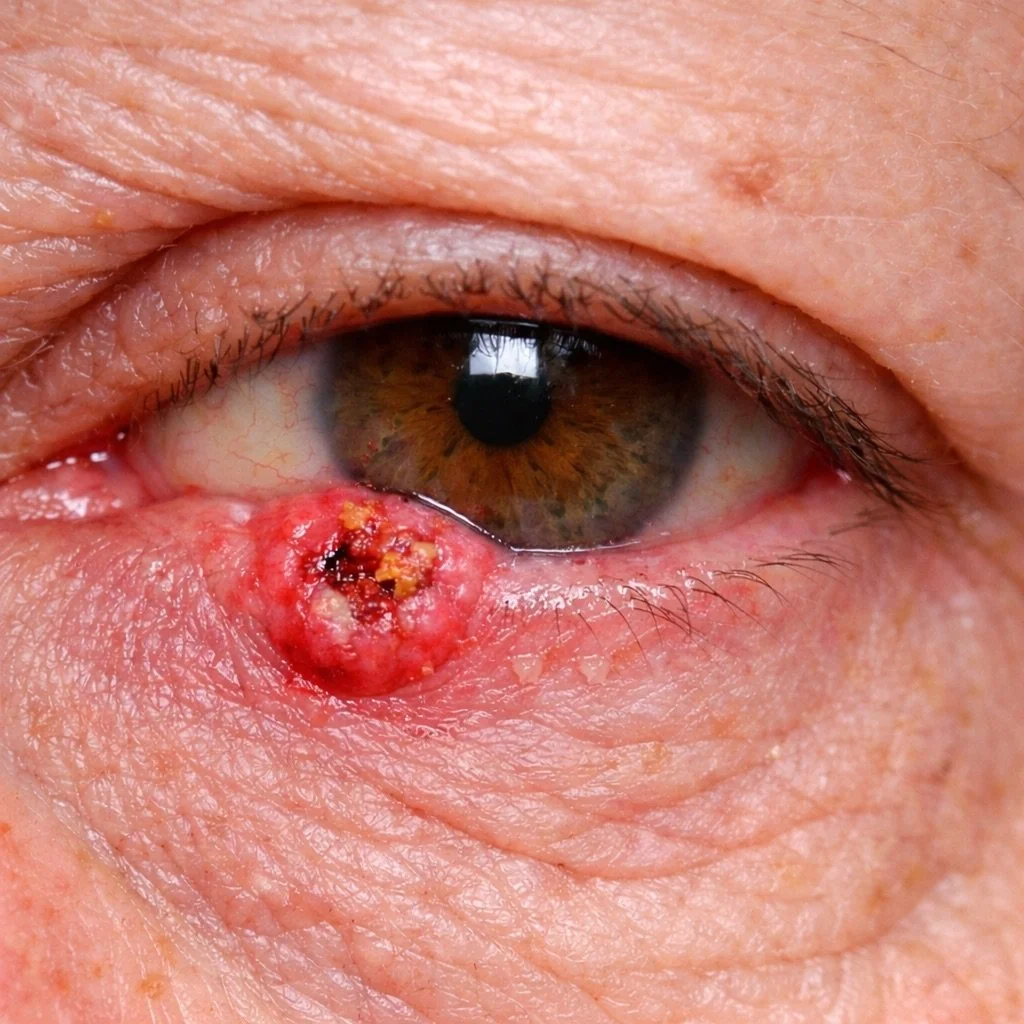
Basal cell carcinoma
Basal cell carcinoma (BCCs) are a form of skin cancer. They are the commonest human malignancy comprising over 90 % of head and neck skin cancer. BCCs grow locally but tend not to spread to other parts of the body. The lesion may have a central, non healing ulcer. They often bleed, itch or are irritating. Surgical removal is still the preferred method of treatment
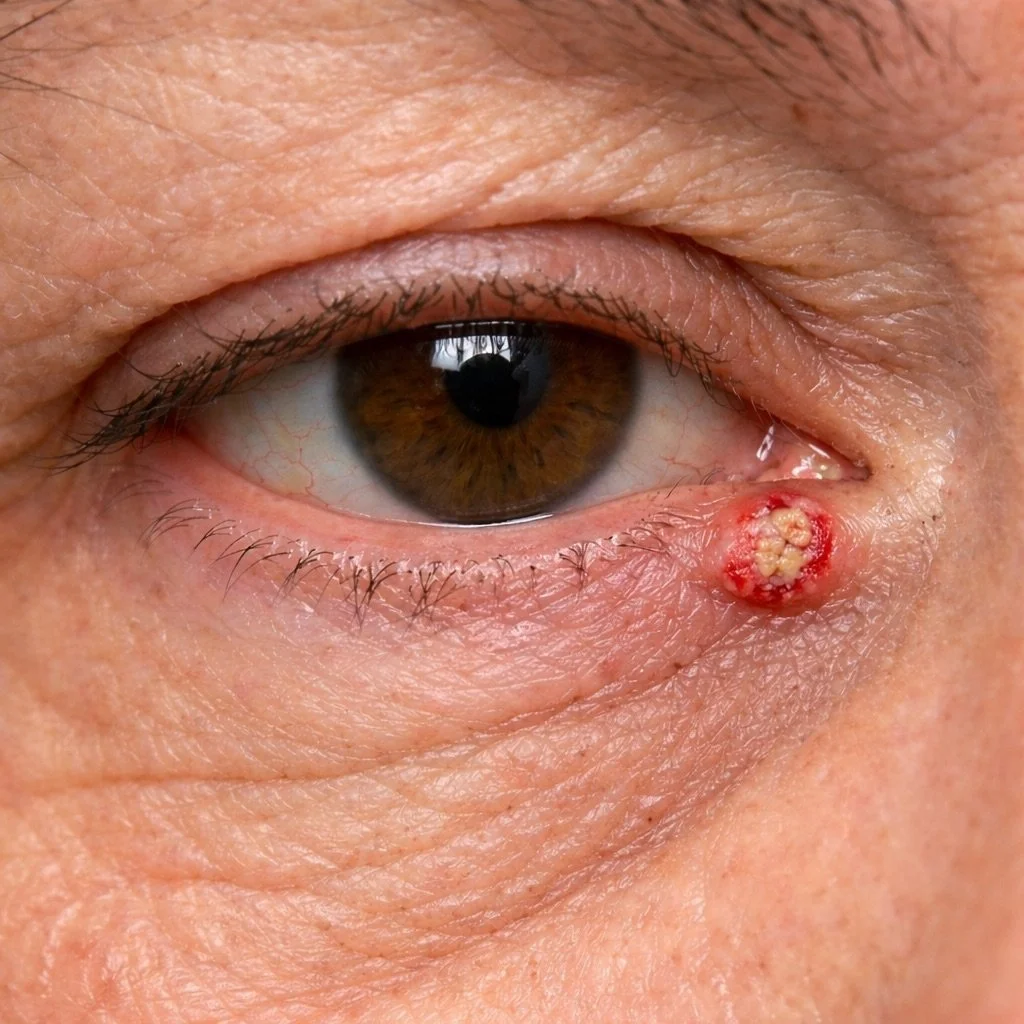
Squamous cell carcinoma
Squamous cell carcinoma (SCCs) are a form of skin cancer. They are the second commonest eyelid malignancy. SCCs form a spectrum of disease, with some milder forms remaining as visible lumps, whereas more severe types have the potential to spread to other parts of the body. They often present in a similar manner to BCCs, with bleeding, crusting, irritation and itchiness. If removed they tend to have a good prognosis.
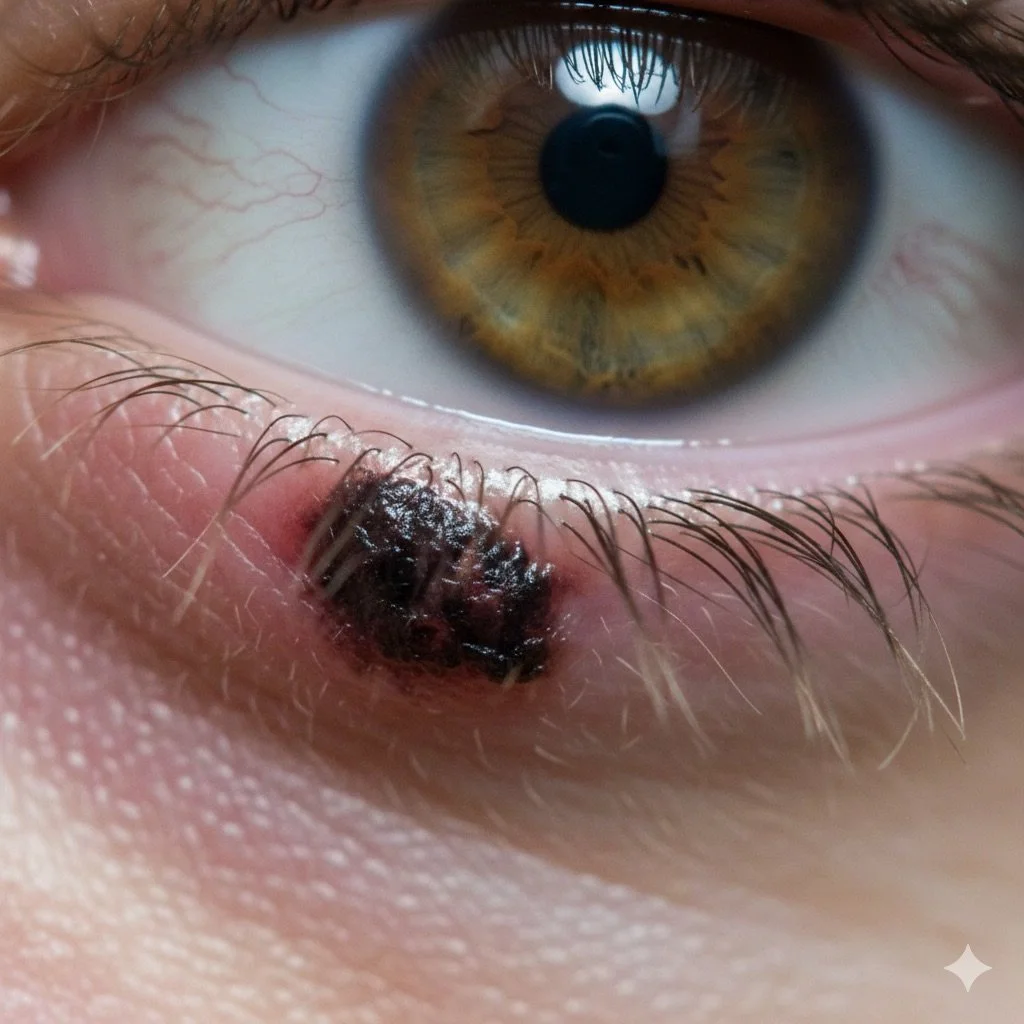
Melanoma
Melanoma is a form of skin cancer. It derives from pigmented cells, melanocytes within the skin. Melanoma is a particularly aggressive form of skin cancer. Early detection and wide local excisions may be curative but in some cases the melanoma has already spread to other parts of the body on presentation. It usually presents as a small lump, with an irregular border and different shades of brown within it. It may be painful, itch or bleed.